


Pancreatic cancer has long presented one of the most difficult challenges in oncology. In the United States, an estimated 67,530 new pancreatic cancer cases and 52,740 deaths are expected in 2026. The five-year relative survival rate remains only 13.7%, while patients diagnosed with distant disease have a five-year relative survival of just 3.4%.
Against this backdrop, daraxonrasib is emerging as an important shift in pancreatic cancer treatment. On August 26, 2026, the U.S. Food and Drug Administration approved Rasonque (daraxonrasib) for adults with metastatic pancreatic adenocarcinoma who have received at least one prior systemic therapy or who are not candidates for multiagent systemic therapy.
Why Daraxonrasib Matters
Approximately 90% to 95% of pancreatic cancers are pancreatic adenocarcinoma, and KRAS or other RAS pathway alterations are central drivers of the disease. Historically, RAS proteins have been particularly difficult to target therapeutically. Daraxonrasib takes a different approach by inhibiting the RAS GTPase family, disrupting signalling that helps cancer cells grow and survive.
The significance extends beyond introducing another medicine. It represents a movement toward molecularly informed treatment selection, where the biology of a tumour increasingly influences therapeutic decisions.
Clinical Results Could Change Treatment Utilisation
The FDA approval was supported by the phase 3 RASolute 302 trial involving 500 patients with metastatic pancreatic adenocarcinoma whose disease had progressed after one prior line of systemic therapy. Participants received either daraxonrasib or physician-selected standard chemotherapy.
The results were notable. Median overall survival was 13.2 months with daraxonrasib compared with 6.7 months with standard chemotherapy. Median progression-free survival was 7.2 months versus 3.6 months, while the objective response rate was 30% compared with 11%. The risk of death was reduced substantially, with a reported overall-survival hazard ratio of 0.40.
These results could alter how treatment pathways develop after progression. Instead of relying predominantly on successive chemotherapy regimens, eligible patients may increasingly move toward targeted treatment based on tumour biology, treatment history and clinical suitability.
The Shift Toward Earlier Targeted Treatment
The potential impact of daraxonrasib is not limited to its newly approved setting. Researchers are also evaluating the drug in earlier lines of therapy and in combination with chemotherapy.
Updated phase 1/2 data presented in 2026 showed encouraging activity in previously untreated metastatic pancreatic cancer. In one combination cohort, daraxonrasib plus gemcitabine and nab-paclitaxel produced a confirmed objective response rate of 58% among 40 evaluable patients with sufficient follow-up. Median progression-free and overall survival had not yet matured.
These findings remain investigational, but they point toward an important possibility: targeted RAS inhibition could eventually become part of treatment strategies earlier in the pancreatic cancer journey.
What This Could Mean for Treatment Patterns
As daraxonrasib enters clinical practice, treatment utilisation could become more complex and data-driven. Healthcare stakeholders will need to understand which patients receive the therapy, when it is introduced, how long treatment continues and what therapies follow it.
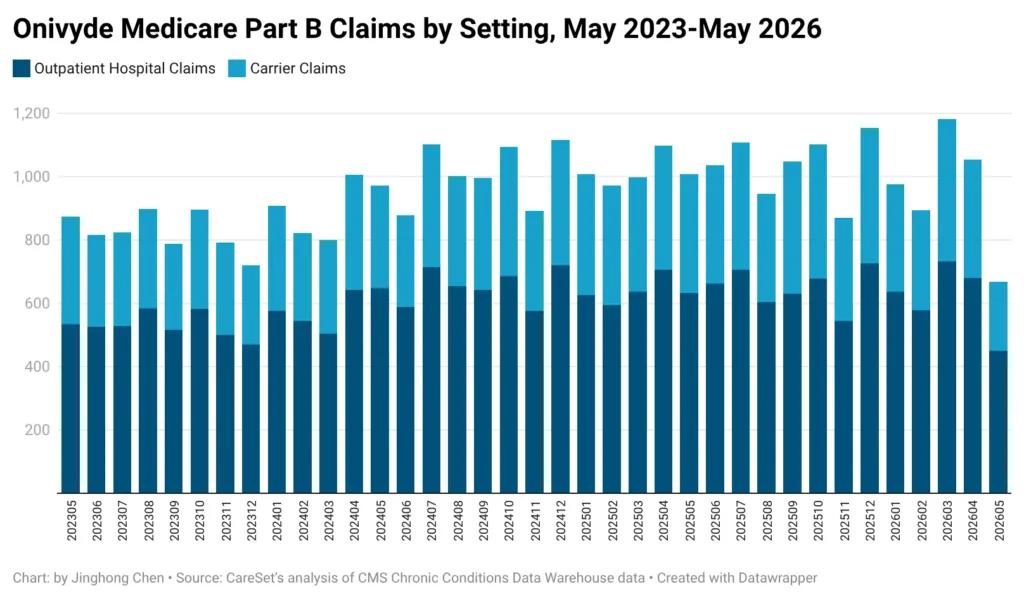
Real-world evidence will therefore become increasingly valuable. Claims data can help identify changes in treatment sequencing, switching, discontinuation, healthcare utilisation and site-of-care patterns after a new therapy enters the market.
This is where CareSet can provide useful Medicare intelligence. Its Medicare claims capabilities support analysis of treatment journeys, adoption and provider behaviour using comprehensive Medicare Fee-for-Service claims data. Such analysis can help pharmaceutical teams understand how emerging oncology therapies translate from clinical evidence into real-world utilisation.
Looking Beyond the Initial Approval
Daraxonrasib is not a cure for pancreatic cancer, and its approval applies to a defined patient population. The treatment also carries important safety considerations, including dermatologic and soft-tissue toxicity, stomatitis, diarrhoea, gastrointestinal perforation and interstitial lung disease or pneumonitis.
Nevertheless, its approval signals a broader change in pancreatic cancer treatment. As molecularly targeted therapies become more effective, treatment decisions may increasingly depend on genetic characteristics, prior treatment exposure and measurable real-world outcomes.
Conclusion
Daraxonrasib marks an important development in a cancer where meaningful therapeutic advances have historically been difficult to achieve. Its phase 3 results demonstrate a substantial survival and progression-free survival advantage over standard chemotherapy in previously treated metastatic pancreatic adenocarcinoma.
The next shift will be determining how these clinical gains translate into everyday treatment patterns. Monitoring patient journeys, treatment sequencing, provider adoption and healthcare utilisation will be essential as targeted pancreatic cancer therapies become part of routine care. For organisations seeking to understand these changes, robust Medicare claims intelligence can provide a clearer view of what happens beyond the clinical trial.
To read original source visit here:https://careset.com/revolution-medicines-breakthrough-drug-doubles-survival-in-advanced-pancreatic-cancer/
For more detailed Medicare data on disease prevalence, treatment patterns, and utilization, contact CareSet.